Lough Neagh and the Treason of Bad Stewardship
Lough Neagh is the largest freshwater lake in Ireland. Yet this vast area has been left between British imperialist rule, its incompetent Stormont regime and the absurd private title of an English aristocratic estate.
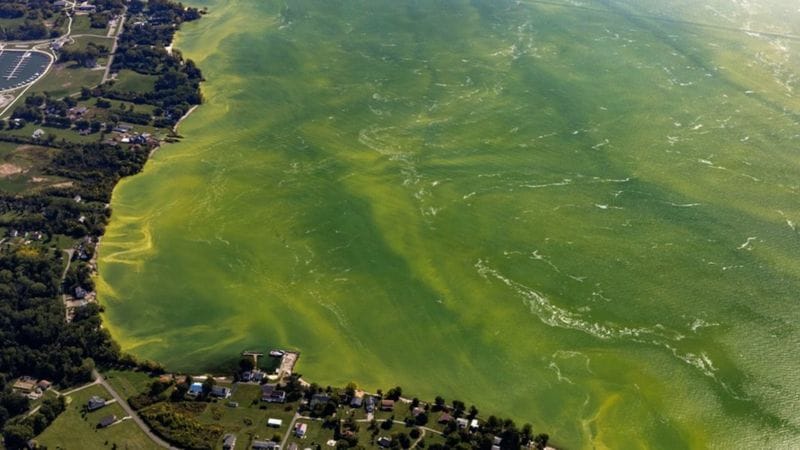
The scandal of Lough Neagh is not merely that a great lake has been polluted and its wildlife decimated. It is that a whole political order has stood beside its poisoning and answered with the language of procedure.
There are reports, plans, consultations, ministerial statements and departmental assurances. There are agencies with initials, committees with remits and politicians with rehearsed concern. Yet the water remains sick. The blue-green algae spreading across the lough is the visible indictment of administrative cowardice and incompetence.
Lough Neagh is the largest freshwater lake in Ireland and Britain. It supplies water, sustains wildlife, supports work, carries memory and occupies a central place in the life of the Six Counties. It is part of the natural patrimony of the Irish people. Yet this vast common inheritance has been left suspended between a dysfunctional Stormont and the absurd private title of an English aristocratic estate.
That is the deeper offence.
The immediate causes must of course be named. Excess nutrients, particularly phosphorus and nitrogen, have entered the waterways feeding the lough. Agricultural run-off, wastewater treatment, domestic systems, industrial discharge, warmer water and invasive species have all contributed to the conditions in which toxic algae thrives. This is no mystery. The lough has not been struck by some inexplicable curse. It has received what a misgoverned catchment has poured into it.
But these facts alone do not exhaust the scandal. But these facts alone do not exhaust the scandal. A poisoned lake also raises the questions of rule, ownership and stewardship. Who had responsibility for Lough Neagh? Who had authority? Who had the duty to intervene before decay became spectacle?
Stormont, as ever, has specialised in the management of decline. Andrew Muir and the Department of Agriculture, Environment and Rural Affairs now carry the file, but they carry it inside a system built for evasion. DAERA can publish an action plan, approve a framework, convene stakeholders and speak gravely of long-term rehabilitation. Stormont can nod along and bury responsibility in inter-departmental process. What neither has produced is the severity required to defend a national resource from degradation.
The lough has become everybody’s concern and nobody’s charge. Departments overlap. Agencies defer. Ministers inherit offices. Parties posture. The public is told that the matter is complex, as if complexity absolves failure. But complexity is precisely why any authority claiming to govern must be judged by its results. A regime which claims authority over drinking water, fisheries, wildlife and the most important freshwater body in the Six Counties faces something far graver than another difficult administrative puzzle. It faces an indictment.
Ordinary farmers should not be made the convenient villains of this situation. Rural Ireland has endured enough lectures from people who know nothing of land, weather, debt, stock, margins or inheritance. Many farmers are trapped inside a system which demands intensification, rewards output, punishes restraint and then expresses shock when the land and water bear the consequence.
The enemy of Lough Neagh is not the small farmer, but a political and economic order which severs production from stewardship. The same must be said of fishermen and local communities. When eel fishing is suspended or damaged, it is a wound to a living tradition. Work that has bound families to the lough across generations is placed in jeopardy by those who failed to preserve the conditions under which such work could continue. That is what bad governance does. It goes beyond mismanagement. It ruins the Irish people’s inheritance.
Yet one cannot speak honestly of Lough Neagh without speaking of ownership. The water may be publicly owned, but the bed and banks of the lough remain tied to the Shaftesbury estate. The fact that a lake of such magnitude should still be entangled with the private title of an English aristocrat is a national obscenity.
This does not mean that the Earl of Shaftesbury personally caused the algae bloom. That would be too simple. Personal villainy is not the issue. The deeper scandal lies in a property order where a natural inheritance of the Irish people is still mediated through conquest, estate and absentee title.
A title deed may record possession, but it cannot settle the moral question. Lough Neagh cannot be treated as a family heirloom, an estate accessory or a relic administered at the sufferance of an aristocratic title. It is a living national inheritance and the fact that its bed and banks remain tied to such ownership is itself part of the wider scandal.
True stewardship involves the defence of inheritance. It conserves the living thing: the lake, the fishery, the community, the memory, the duty between generations. When an aristocratic property arrangement stands over a great national lake and Stormont and DAERA prove incapable of rescuing it from degradation, the matter becomes constitutional in the deepest sense. It asks whether the Irish people are capable of commanding their own patrimony.
The answer cannot be another DAERA document, another Stormont debate or another ministerial expression of concern. The lough needs enforcement, wastewater infrastructure fit for purpose, nutrient reduction at source, serious controls on pollution, properly funded monitoring, support for farmers to change practices without destroying their livelihoods and protection for fishermen whose work has been endangered.
The ownership question must be brought to the centre. If the Shaftesbury estate is willing to relinquish its stake, then let that process be forced into reality and not lost in polite discussion. If it is not, then political pressure should make the continuance of such ownership intolerable. Either way, the principle that Lough Neagh should not remain a private aristocratic remnant should now be beyond dispute. Its bed and banks should pass out of aristocratic title and into municipal custody through the councils bordering the lough, acting jointly through a Lough Neagh conservancy with local fishermen, farmers and communities represented. Such an arrangement would not settle the national question, but it would at least remove a great Irish lake from private aristocratic ownership and place binding duties of restoration upon those answerable to the communities around it.
A living inheritance has been treated as a convenient sink for the failures of agriculture policy, wastewater policy, planning policy and regulatory gutlessness.
Some disasters strike a people from outside. Lough Neagh’s disaster came by permission. The lough was not betrayed in a single moment. It was betrayed by years of indulgence, neglect, evasion and cowardice
A people that cannot defend its waters has forgotten something elemental. Before constitutions, departments, parties and policy papers, there is the basic duty of belonging to a land: to receive it with gratitude, to guard it with discipline and to pass it on unpoisoned.
Lough Neagh must be restored because it is useful, beautiful, historic and necessary. But more than that, it must be restored because no nation worthy of the name permits its inheritance to rot between aristocratic title and the paralysis of Stormont.